
Software Development
Saket Khare
CTO & Co-Founder
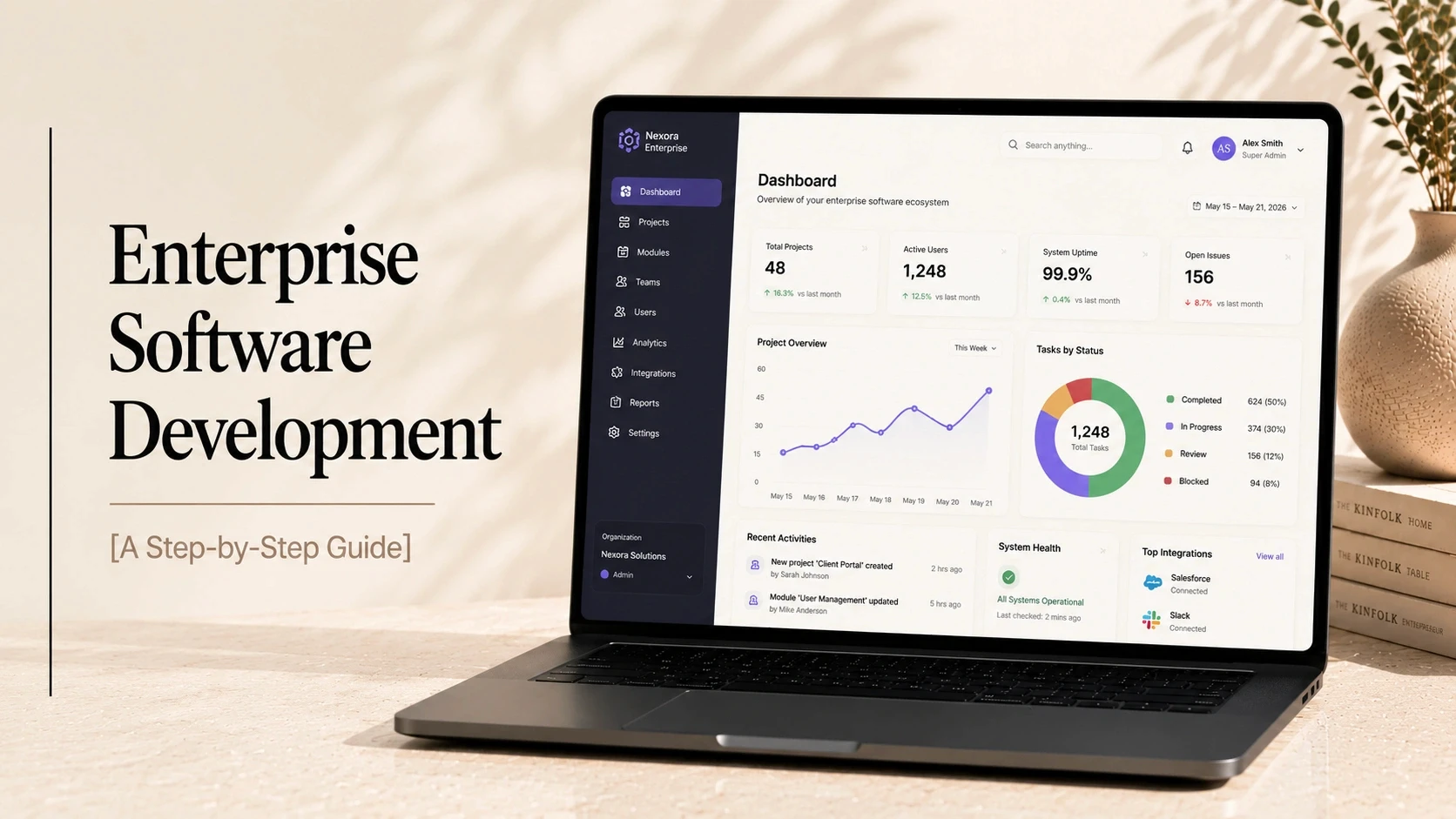
You are probably reading this because your current internal software is falling apart. Your team uses five different tools just to finish one simple task. You know it is time for a major upgrade. But the thought of starting a massive tech project probably terrifies you. I completely understand that fear. Building custom systems for huge companies is incredibly stressful without a solid map. Let us sit down and figure out how to handle this beast together.
Let me share a hard truth with you right now. Recent industry data shows that nearly seventy percent of major digital transformations fail. They either go way over budget or never launch at all. That is a terrifying statistic for any business leader. You definitely do not want to become part of that group. The stakes are simply too high when dealing with company-wide operations.
Why do so many smart teams fail? They usually skip the planning phase completely. Managers rush their teams straight into writing code. Successful enterprise software development requires absolute discipline from day one. You must build a rock-solid foundation first. Skipping early steps will absolutely destroy your budget later. We need to follow a proven system.
The Big Picture Overview
Before we get into the heavy details, let us define what we are actually doing. Creating tools for a massive company is not like making a simple mobile app. We are building the central nervous system for your entire business.
People constantly ask me about the enterprise software lifecycle. The enterprise software lifecycle is simply the structured, step-by-step journey of planning, designing, building, testing, and maintaining a massive corporate system. It keeps everyone organized. It prevents developers from guessing what to do next. It ensures the final product actually solves your specific business problems.
You need to understand that this journey takes time. A normal website might take a few weeks. A full enterprise platform usually takes anywhere from six to eighteen months to launch properly. Patience here pays off immensely.
Regular Coding vs Large Scale Operations
Clients often wonder why they cannot just hire a cheap freelancer for these projects. I always explain that the rules of the game change at this level. Let us look at the core differences. This simple table shows why standard methods fail at the corporate level.
Feature | Standard Development | Large Scale Software Development |
User Base | Hundreds of users | Thousands of employees globally |
Data Security | Basic passwords | Bank-level encryption & compliance |
Integrations | One or two simple plugins | Dozens of complex legacy systems |
Downtime Risk | Minor inconvenience | Millions of dollars lost per hour |
You can clearly see the risk difference. If a basic blog crashes, nobody really cares. If your inventory management software goes offline, your entire supply chain stops. That level of risk requires a highly specialized approach.
Step One: Deep Discovery and Strategy
This is my favorite part of the entire journey. We do not touch any code here. We just talk, listen, and map things out.
The enterprise development process always begins with deep discovery. I will sit with your department heads. We will interview your daily software users. We need to find exactly where your current systems break down. A CEO usually sees a different problem than a warehouse worker sees. We must gather all those perspectives.
After gathering that data, we create a master blueprint. We define every single feature your team actually needs. We also throw away the features nobody will ever use. Getting this blueprint perfect saves thousands of hours of wasted coding later on.
Step Two: System Architecture and Design
Now we move into the actual design phase. Think of this like drawing the blueprints for a massive skyscraper.
Our senior engineers decide how the database will handle millions of records. They choose the specific programming languages that fit your long-term goals. They map out how the new platform will talk to your old accounting software. Everything must connect perfectly.
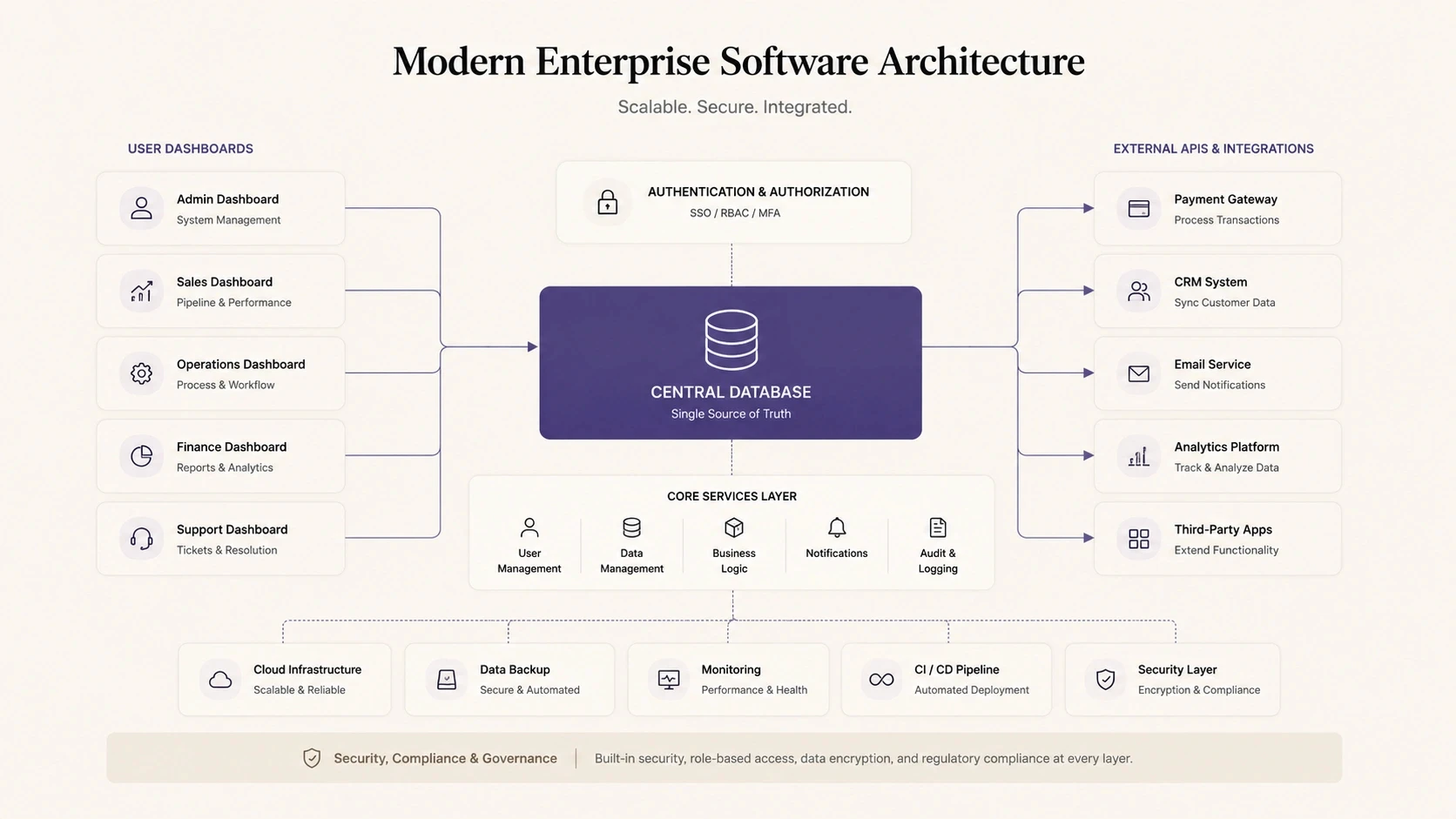
At the same time, the design team creates visual mockups. They build interactive screens. We want your employees to find the new system incredibly easy to use. If the screen looks confusing, your staff will simply refuse to use the new software. We test these visual designs thoroughly before any actual programming starts.
Step Three: The Heavy Engineering Phase
This is where the magic happens. The coding finally begins.
However, we do not build the entire massive system all at once. That old method is far too risky. Instead, we break the massive project down into tiny, manageable pieces. We call these pieces "sprints." A sprint usually lasts about two weeks.
The engineering team builds one specific feature during a sprint. They finish it, test it, and show it to you. You get to see real progress every single month. If you want to change a button color, we can easily fix it right then. This flexible approach keeps the project moving smoothly. It completely prevents those horrible end-of-project surprises.
Step Four: Extreme Stress Testing
Never launch a massive platform without trying to break it first. I cannot emphasize this enough.
Testing is arguably the most critical part of the enterprise software lifecycle. We put the new system through absolute hell. Our quality assurance team tries to hack into the database. They simulate ten thousand employees logging in at the exact same second. We want to see if the servers crash under heavy pressure.
Finding a bug right now costs almost nothing to fix. Finding a major bug after your entire company switches to the new system is a financial disaster. We test everything until it is absolutely bulletproof.
Step Five: Deployment and Staff Training
Launch day is incredibly exciting. But it is also deeply nerve-wracking.
We rarely flip a giant switch and move everyone over at once. That causes mass panic in the office. A smart launch happens in phases. We might move the marketing department over first. We watch them use the tool for a week. We fix any tiny issues they find. Then we move the sales team over.
Training is also vital here. Your team needs clear manuals and video tutorials. If you simply dump new technology on your staff without explaining it, productivity will drop instantly. Proper training ensures a smooth transition.
Step Six: Continuous Evolution
A big secret in tech is that software is never truly finished.
Your business will grow. Your industry will change. Your new platform must adapt to those changes. Large scale software development requires ongoing maintenance. We monitor the servers constantly. We install critical security patches. We add new features as your teams request them. Treating your software as a living, breathing asset guarantees a massive return on your initial investment over the next decade.
Building Corporate Systems with CREATEXP
You are probably wondering who actually handles these massive builds. You need a team that understands both high-level business strategy and deep technical coding.
My friends and I started CREATEXP in Bangalore exactly for this reason. Back in 2023, we noticed a massive problem. Founders and executives were forced to choose between slow, overly expensive corporate agencies or unreliable cheap freelancers. Neither option worked well for serious businesses. We decided to bridge that exact gap.
Today, we operate a design and development studio that moves with the agility of a lean startup. We also deliver the exact precision of a top-tier enterprise agency. We handle everything completely in-house. Our tight-knit team of strategists, designers, and developers handles every phase of the lifecycle together. We never outsource your core business logic to strangers.
We have successfully partnered with over fifty founders and large enterprises across five continents. We specialize in deep custom software, CRM solutions, and complex ERP systems. We strip away the unnecessary processes. We focus strictly on building high-performing digital products that drive real growth. We stay fully invested in our relationship with you long after the final code goes live.
Stop fighting with broken tools.
Let us map out a custom software system that actually scales with your business.
Start Your Project Blueprint
Your Quick Survival Guide
Let us quickly recap the most important rules. If you are preparing for a massive digital upgrade, keep these specific points pinned to your desk:
Plan relentlessly: Never skip the discovery phase. Map every feature out before writing a single line of code.
Design for humans: Complex systems must look simple. Good design guarantees your staff will actually use the tool.
Build in phases: Use two-week sprints. Review progress constantly to avoid massive mistakes.
Test aggressively: Try to crash your own servers before launch day.
Roll out slowly: Move one department at a time to prevent office chaos.
Questions I Hear Constantly
How long does an enterprise development process actually take?
There is no single answer, but expect a minimum of six months. Very complex ERP systems replacing decades of legacy tools can take up to eighteen months. Rushing the timeline always results in broken code.
What is the hardest part of building corporate software?
The technology itself is rarely the hardest part. The hardest part is usually human resistance. Employees hate changing their daily routines. Building a highly intuitive user interface and providing excellent training solves this exact problem.
Do we need to replace all our old systems at once?
Absolutely not. A smart team builds new software that can talk to your older, critical systems through secure APIs. You can slowly replace your older tools one by one over several years. This drastically reduces your immediate financial risk.
How do we secure our sensitive company data?
Security must be built into the foundation, not added later. We use military-grade encryption, secure user authentication protocols, and strict data compliance standards. Regular penetration testing ensures hackers cannot find a backdoor into your company records.
Warning: Working With Us May Trigger Unstoppable Momentum