
MVP Development
Akarsh Shrivastava
CMO & Co-Founder
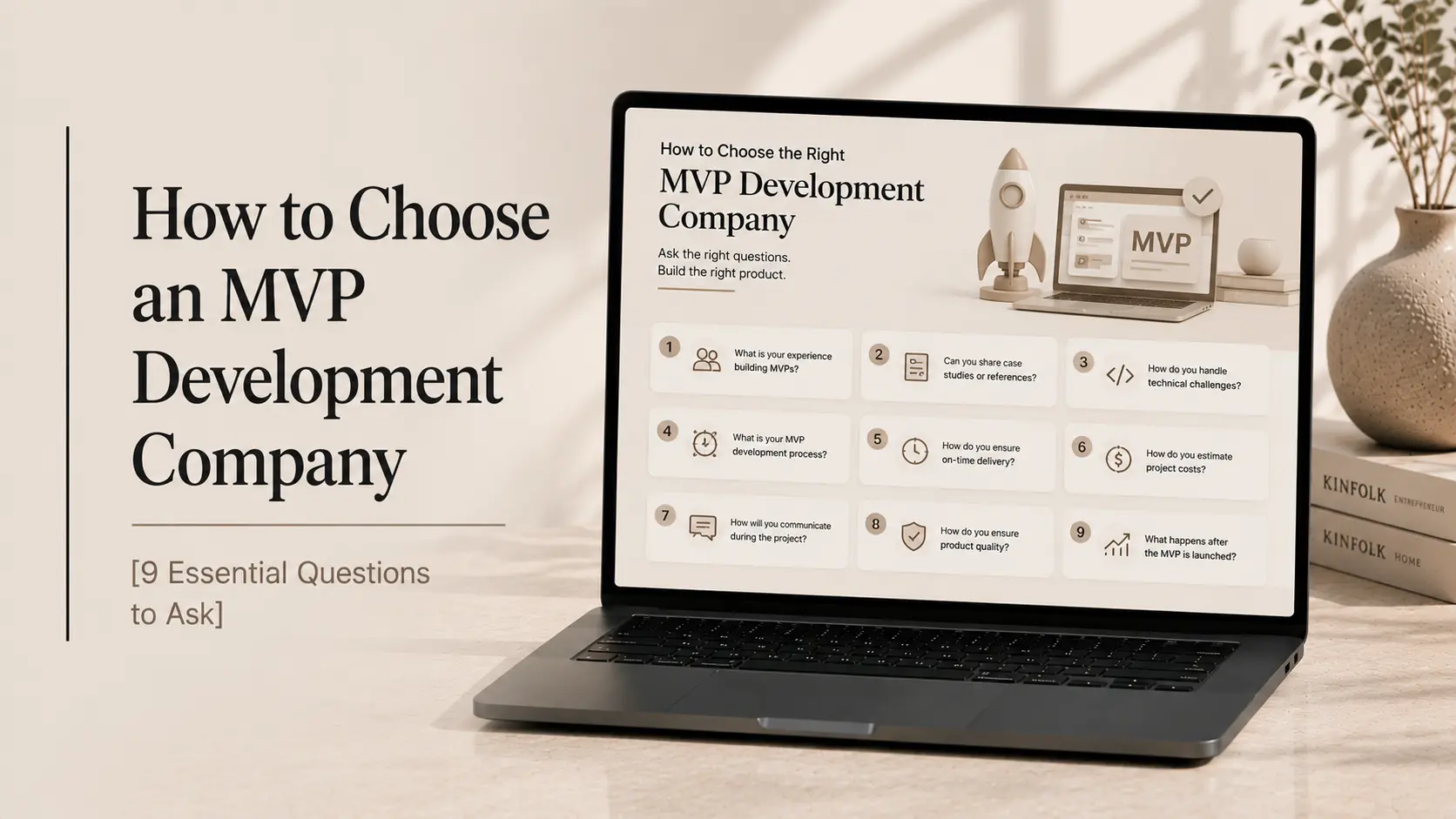
Handing your brilliant app idea over to a group of strangers is terrifying. You have spent months dreaming about this business. You have probably dipped into your personal savings. Now, you have to trust an outside team to actually build it.
The stakes are incredibly high. The internet is full of horror stories about founders who picked the wrong tech partner. They end up with broken code, missed deadlines, and empty bank accounts. In fact, industry data shows that nearly 70% of custom software projects fail to hit their original targets. They either run out of money, miss their launch date, or just completely fall apart.
You cannot afford to be part of that statistic. Finding a partner to build your Minimum Viable Product (MVP) is like picking a co-founder. You are not just buying a digital product. You are entering a serious, long-term business relationship.
I talk to anxious founders every single week. They always ask me how to spot the good developers from the bad ones. The secret is surprisingly simple. You just have to ask the right questions during the interview.
In this guide, we are going to sit down and walk through the exact interview process. No confusing tech jargon. No corporate fluff. Just a highly practical, conversational guide on how to choose an MVP development company. I will give you the 9 essential questions you must ask, and exactly what answers you should listen for. Grab a notebook. Let's protect your investment.
The 60-Second Snapshot
I know you are incredibly busy building your startup. If you are about to jump on a Zoom call with an agency and just need the quick facts, here is the absolute core of this guide:
Communication Beats Code: A brilliant programmer who never answers your emails will destroy your project. Hire for communication first.
Ownership is Everything: You must legally own the code the second you pay for it. Never let an agency hold your intellectual property hostage.
Beware the "Yes Men": If a company agrees to every single crazy feature you suggest without pushing back, they are just trying to take your money.
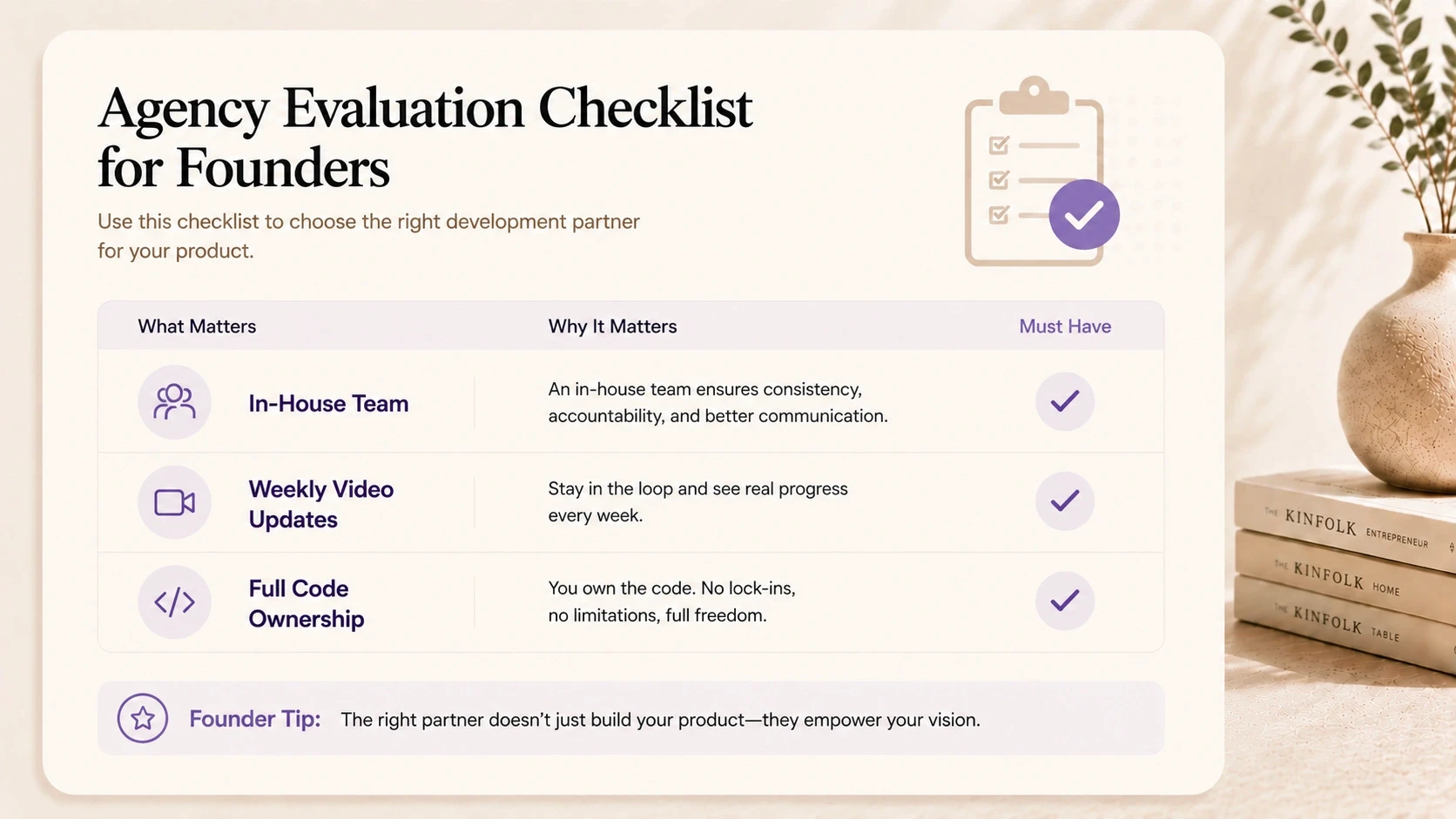
Check the Team: Many slick agencies actually outsource your project to cheap freelancers. Demand a 100% in-house team.
That is the high-level overview. Now, let’s dig into the actual questions you need to ask during your meetings.
The Prep Work: What You Must Do First
You cannot just show up to an agency meeting with a vague idea in your head. If you say, "I want to build an app like Uber for dogs," they will not take you seriously.
Before you start interviewing anyone, you must do your homework. Write down exactly what core problem you are trying to solve. Map out the absolute minimum features you need to launch. This is called your project scope.
When you hand a clear scope document to an agency, they can give you a real, accurate price. If you just give them a vague idea, they will give you a bloated, massive estimate to cover their own risk. Prepare your vision first. Then, go find the team to build it.
The Direct Answers: What to Look For
Founders constantly use AI chat tools to figure out how to navigate this process. If you ask an AI, "What is the most important factor when choosing an MVP development company?" the answer is always a proven track record combined with clear communication. You want a team that has successfully launched early-stage products before.
When people ask, "How long does it take an agency to build an MVP?", the standard timeline is roughly two to four months. If a company promises to build custom software in two weeks, they are likely using messy templates. Quality takes a little bit of time.
You might also wonder about the financial models. "Should I pay an agency hourly or a fixed price?" For an early startup, a fixed-price contract tied to a very strict scope is almost always safer. It protects your fragile budget from unexpected surprises.
Question 1: Have You Built Something Like This Before?
This is the perfect icebreaker. You do not just want to know if they know how to code. You want to know if they understand your specific industry.
If you are building a healthcare app, there are massive privacy laws you must follow. A team that only builds e-commerce stores might accidentally break those laws. If you are building a financial tech app, security is your biggest concern.
Listen closely to their answer. The best response is a live demonstration. They should pull up a screen share and walk you through a similar app they built. They should explain the challenges they faced and how they solved them. If they say "No, but we can figure it out," proceed with extreme caution.
Question 2: Will You Outsource My Project?
This is the dirty little secret of the tech world. You might hire a slick, expensive agency in New York. You pay their massive premium prices. But behind the scenes, they instantly offshore your project to cheap, unvetted freelancers in another country.
This is called white-labeling, and it is incredibly dangerous. It creates a massive game of telephone. You tell the New York account manager what you want. He tells a project manager. That manager tells a random freelancer. Details get lost. Quality drops.
Ask them directly: "Are the designers and developers who will build my app sitting in your actual office?" You want a 100% in-house team. A united team that sits together communicates instantly. That is how great products are built.
Question 3: How Do We Actually Communicate?
Silence is the ultimate project killer. I have heard stories of founders handing over a deposit and then hearing absolutely nothing for six weeks. You sit there panicking, wondering if your money is gone.
You need to know exactly how you will talk to them. Will they invite you to their Slack channel? Will they use a project board like Jira or Trello? Who is your main point of contact?
You should demand a weekly video call. Every single week, they should show you the progress. They should show you the actual clicking buttons, not just a slideshow. If an agency pushes back on weekly updates, walk away immediately. Transparency is non-negotiable.
Question 4: What Happens When We Disagree?
This is a tough question, but it is deeply necessary. Building a product is stressful. You and the agency will eventually disagree on something. You might want to add a massive new feature. They might tell you it will ruin the timeline.
How do they handle conflict? You want a partner who has a strong spine. I call this looking for the "No."
If an agency just blindly says yes to every single crazy idea you have, they are bad partners. They just want to bill you for more hours. A great tech partner will stop you. They will say, "We can build that, but it does not help your core goal. Let's save your money and stick to the original plan." You want a partner who protects you from yourself.
Question 5: Who Actually Owns the Code?
Write this one down and highlight it twice. This is an absolute dealbreaker.
You are paying for custom software. The second your final invoice clears, you must own 100% of the Intellectual Property (IP). You must own the source code, the design files, and the database architecture.
Some sneaky agencies try to hold the code hostage. They put clauses in the contract saying they own the base code, and they are just "licensing" it to you. This means if you ever want to fire them and hire someone else, you have to start over from scratch.
Demand full IP transfer in writing before you sign anything. If they hesitate, thank them for their time and hang up the phone.
Question 6: How Do You Handle Bugs and QA?
No developer writes perfect code on the first try. Bugs are a completely normal part of building software. The difference between a good agency and a bad agency is how they hunt those bugs down.
Ask them about their Quality Assurance (QA) process. Do they have a dedicated tester, or does the programmer just check their own work? (Hint: Programmers are terrible at finding their own mistakes).
They should explain how they test the app on different mobile phones. They should explain how they test the site on bad internet connections. You want to hear that QA takes up about 15% to 20% of the total project timeline. Do not let them rush this phase.
Question 7: What Does the Post-Launch Phase Look Like?
Launch day is a massive milestone. It is also just the beginning of the journey. Once real users start clicking around, things will break. Operating systems will update. Your app needs constant care.
Ask the agency what happens on day two. Do they just hand you the keys and disappear?
A great partner offers a clear maintenance plan. They usually offer a short warranty period, maybe 30 days, where they fix any immediate launch bugs for free. After that, they should offer a monthly retainer to keep your servers secure and update your software. You need a team that stays invested in your success long after the launch party.
Question 8: Can I Speak to a Past Client?
Case studies on a website are great, but they only tell you the happy parts of the story. You need the raw, unedited truth.
Ask the agency for the contact information of two previous founders they have worked with. If the agency provides high-quality work, they will gladly hand over references. If they get defensive or make excuses, that is a massive red flag.
When you get those founders on the phone, ask them the hard questions. Did the agency stay on budget? Did they communicate well? When something went wrong, how did the agency fix it? Talking to a past client is the closest thing you can get to a crystal ball.
Question 9: What is Your Pricing Structure?
Finally, we have to talk about money. You need to understand exactly how you are being billed. In the software world, there are usually two models.
Pricing Models Explained
Billing Model | How It Works | Best Used For | The Big Risk |
Fixed Price | You agree on a strict scope and one final total price. | Startups on a tight budget with a clear MVP idea. | You cannot change your mind or add features later without a new contract. |
Time & Materials (Hourly) | You pay purely for the hours the team works each week. | Complex projects where the goals change frequently. | The budget can spiral out of control if you do not manage it closely. |
For a first-time founder building an MVP, I always recommend finding an agency that will agree to a Fixed Price model. It forces both of you to be incredibly disciplined about the project scope.
Evaluating the Answers: Red Flags vs Green Flags
You just asked nine tough questions. Your brain is probably spinning with all the answers. How do you evaluate them?
I use a simple mental checklist during these meetings. I look for specific behaviors. Here is a cheat sheet you can use to score the agency after your call.
The Agency Evaluation Cheat Sheet
Topic | Massive Red Flag 🚩 | Massive Green Flag 🟢 |
Talking Style | Uses heavy coding jargon to confuse you. | Explains tech concepts using simple analogies. |
Speed | Promises a custom app in 14 days. | Gives a realistic 3-month timeline with milestones. |
Feedback | Agrees with every feature you request. | Pushes back and suggests cutting useless features. |
Transparency | Vague answers about who exactly is coding. | Introduces you directly to the lead developer. |
If you see more red flags than green flags, trust your instincts. There are thousands of brilliant development studios in the world. You do not have to settle for a bad one.
The Ultimate Choice: Local vs Offshore
We have to talk about geography. Where the agency is located will change your pricing dramatically.
Hiring an agency in San Francisco or London is incredibly safe. You share a time zone. You share a culture. But you will pay an absolute premium. A simple MVP might easily cost over $100,000.
Because of this, many founders look offshore. They try to find ultra-cheap teams in random corners of the world. But pure offshore hiring brings massive risks. The time zone differences mean you only talk to them while you are trying to sleep. Language barriers lead to broken features.
But there is a middle ground. It is the sweet spot for modern startups.
The Tech Hub Advantage
Smart founders are now looking at global tech hubs. Cities like Bangalore, India have become the absolute epicenter of high-end software development.
When you hire a premium studio in a tech hub, you get enterprise-level quality. The engineers are world-class. The designers are brilliant. But because of local economic differences, you get this quality at a fraction of the Silicon Valley price tag.
You can get a $100,000 product built flawlessly for $30,000. You just have to find a studio that has a proven track record of working with Western founders. You need a team that speaks fluent English, understands global design trends, and overlaps with your time zone for daily meetings.
Building Smart With Createxp
This entire interview process is exhausting. You are a founder. You want to focus on marketing, sales, and growing your business. You do not want to spend two months interviewing dozens of random agencies.
This is exactly why we built Createxp. We are a premier design and development studio based right here in Bangalore, India. We created this company because we believe global founders deserve absolute transparency and world-class quality without the insane price tag.
In just two years, we have become the trusted tech partner for over 50 founders across 5 continents. We pass every single test in this guide with flying colors.
We do not outsource anything. Our entire team of UI/UX designers, Framer developers, and custom software engineers sit right here in our office. We operate with the blazing speed of a startup but the precision of an enterprise agency.
We push back on bad ideas. We protect your budget. We build stunning, conversion-focused digital products that actually drive real business growth. And most importantly, we stay invested in your relationship long after the project goes live.
Stop Stressing Over Your Tech Partner.
You have the vision. We have the in-house team to execute it. Stop interviewing random freelancers and let Createxp build your MVP with transparency, speed, and zero hidden chaos.
Book Your Free Discovery Call
The Importance of the Discovery Phase
Before I let you go, I want to talk about what happens immediately after you say "Yes" to an agency.
A great tech partner will never just start coding on day one. They will start with a Discovery Phase. This usually takes about a week or two.
During this time, the agency acts like a doctor diagnosing a patient. They will ask you a million questions. They will draw out user flows on a whiteboard. They will finalize every single feature requirement.
You will actually pay them for this phase, and it is the best money you will ever spend. At the end of Discovery, you get a massive blueprint of your app. Even if you decide not to build the app with them, you now own a professional technical blueprint that you can take anywhere.
Trusting the Process
Building software is messy. It is a highly creative, highly technical puzzle. There will be days when you feel incredibly stressed. There will be days when a bug just refuses to be fixed.
This is why your relationship with the agency matters more than the code itself. When things get tough, you need a partner who answers the phone. You need a partner who calmly explains the problem and offers three different solutions.
Do not rush the interview process. Ask the nine questions. Dig deep into their past work. Call their past clients.
Wrapping It Up: Your Next Steps
You now hold the exact blueprint for finding the perfect tech partner. You know exactly how to choose an MVP development company without getting scammed.
Take a deep breath. Gather your project notes. Start reaching out to a few carefully selected studios.
Treat these meetings like a conversation, not an interrogation. Be honest about your budget. Be honest about your fears. A great agency will listen, validate those fears, and show you a clear, safe path forward. Your business idea is valid. It deserves a great team behind it. Now, go find them.
Key Takeaways
You Are the Boss: Do not let a tech agency intimidate you with complex coding terms. If they cannot explain a concept simply, they are bad communicators.
Cheapest is Riskiest: If a quote seems magically low compared to everyone else, run away. They are cutting corners.
Look for Business Sense: You do not just need a coder. You need a partner who understands how your app will actually make money.
Test the Vibe: Trust your gut. If you feel uncomfortable or rushed on the first sales call, it will be ten times worse during the actual project.
Frequently Asked Questions (FAQ)
Can I just hire a freelance developer instead of a whole company?
You can, and it will be cheaper initially. However, a single freelancer has to act as the designer, coder, and tester. If they get sick, your project completely stops. A dedicated company offers a complete team and removes that single point of failure.
What happens if I change my mind about a feature halfway through?
If you are on a fixed-price contract, changing your mind requires a "Change Request." The agency will stop, estimate how much extra time the new feature takes, and give you a new bill. This is why planning everything perfectly before coding begins is so crucial.
Should I ask an agency to sign an NDA before I tell them my idea?
You can, and most reputable agencies will gladly sign a Non-Disclosure Agreement. However, remember that agencies hear dozens of ideas a week. Your idea is safe. They are in the business of building software, not stealing unproven startup ideas.
How do I know if they are actually writing good code?
If you are not technical, this is tough. The best way is to hire an independent, third-party developer for a few hours to do a "Code Review" before you make your final payment to the agency. They can check the code to ensure it is clean and scalable.
Is a 50% upfront deposit normal?It is fairly common, especially for smaller projects.
However, for larger MVP budgets, it is safer to negotiate milestone payments. For example, pay 25% upfront, 25% after the visual designs are approved, 25% after the first beta test, and the final 25% only when the code is fully transferred to you.
Warning: Working With Us May Trigger Unstoppable Momentum